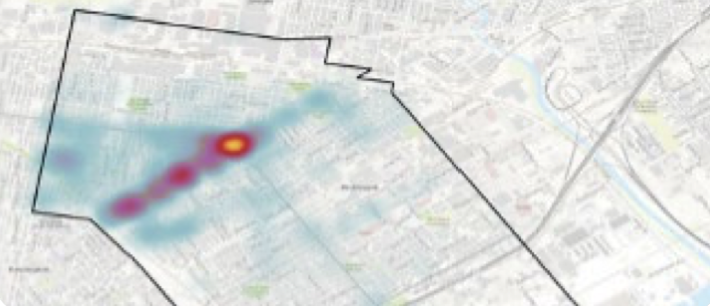
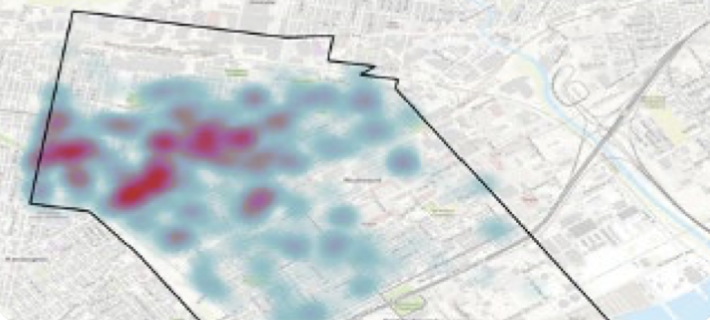
The City of Philadelphia has the second highest opioid overdose death rate in the U.S. In this project, we evaluated two City efforts taking place in Kensington, the neighborhood with the city’s highest overdose rate and high rates of poverty, homelessness, and dilapidated neighborhood conditions.
Alternative Ambulance for Overdose Treatment Services
Experiencing an overdose often brings people who use opioids into contact with healthcare providers and represents an opportunity to improve outcomes through harm reduction and care linkage. The Alternative Response Unit (AR2) aims to close this gap by engaging people who use opioids at the time and place of their overdose. The AR2 responds to all 911 calls for overdose and if the patient does not want to go with traditional EMS to the hospital, AR2 is able to connect the patient directly to treatment services.
Engagement with the alternative response unit (AR2) was associated with a patient being less likely to experience a subsequent nonfatal opioid overdose, compared to patients who only engaged with a traditional EMS ambulance.
Community Environmental Improvements
Dilapidated neighborhood conditions are associated with drug sales, substance use, and morbidity. The city is focusing remediation efforts in Kensington, including abatement of vacant lots and cleaning and sealing of abandoned houses.
SPARROw found that environmental interventions in Kensington were associated with a significant 6.6% reduction in fatal opioid overdose. Abandoned house remediation specifically was associated with a 17.6% decrease in fatal and 11.5% decrease in nonfatal opioid overdose.
As the opioid crisis continues to demand urgent action, this work shows what communities have long known: when neighborhoods are cared for, people are safer.
PI: Eugenia C. South, MD MS and Zachary Meisel, MD, MS
Partners: Philadelphia Fire Department, Philadelphia Health Department, Department of Behavioral Health and Intellectual Disabilities, Managing Directors Office
SPARROw